
Morrison County Criminal Records
A Morrison County criminal court record begins when charges are filed in District Court. The file is maintained by court administration under the Minnesota Judicial Branch. It is the court-level record, not the arresting agency's report and not the jail roster. The criminal case file may include a complaint, probable-cause statement where public, charge list, bond order, hearing notices, plea entries, motions, orders, trial events, disposition, sentence, probation violation events, and warrant-related entries once public.
Morrison County District Court is the trial court for felony, gross misdemeanor, misdemeanor, petty misdemeanor, and traffic-criminal matters filed in the county. The Morrison County Attorney prosecutes felony, gross misdemeanor, and juvenile offenses committed in Morrison County, plus misdemeanors and petty misdemeanors in unincorporated areas and municipalities that contract with the office. For a closer look at charge filing after arrest, use the court-charge page; for broad civil, family, probate, and traffic records, use the general court records page.
The Morrison County Attorney page identifies the office's prosecution role in local criminal cases.
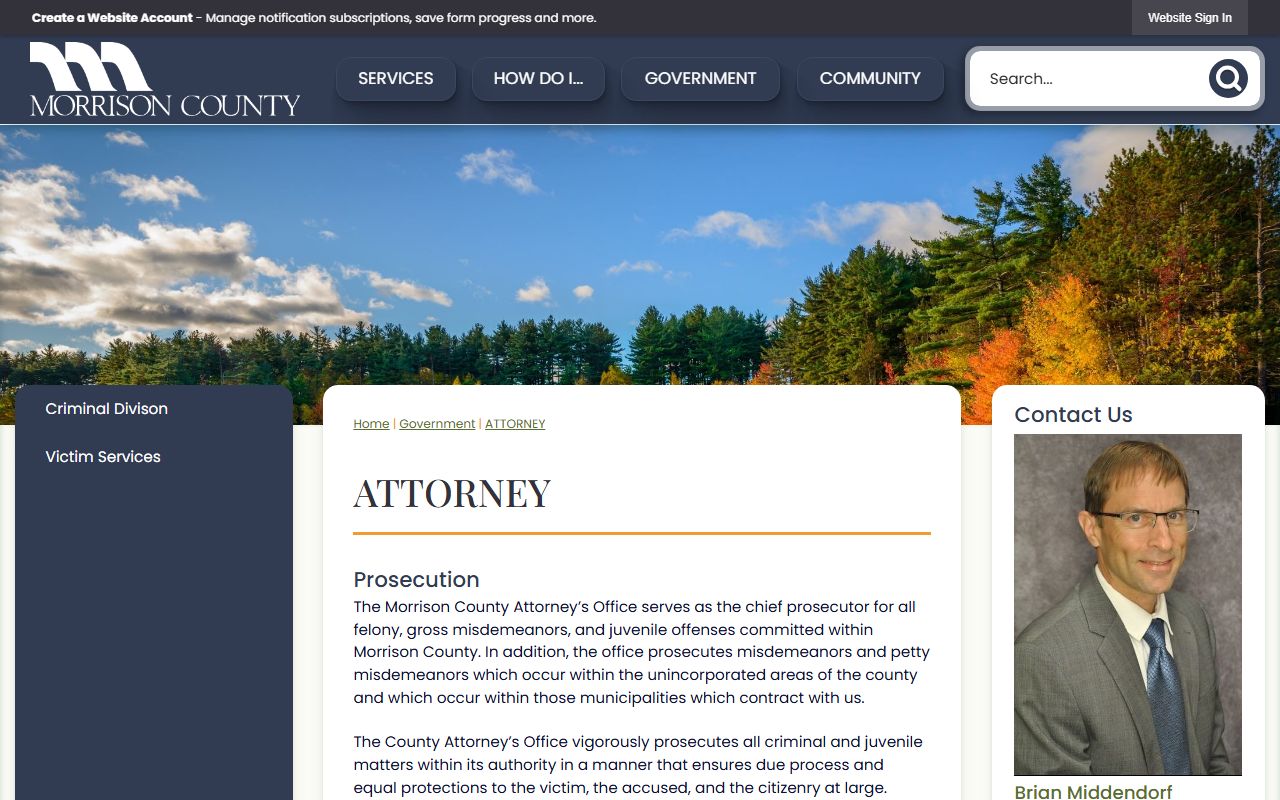
That prosecution role explains why the complaint and court charge record feed into the District Court case file.
Search Morrison County Criminal Cases
Most public Morrison County criminal court records are searched through MCRO Case Search. Select the criminal case category and choose Morrison as the county court location when the search should be local. Search by case number when possible. MCRO terms warn that pending criminal, traffic, and petty misdemeanor cases with no conviction may not return in defendant-name search results. A case number search can still locate a public case when a name search fails.
- Open MCRO Case Search and select Name, Case Number, Citation Number, or Attorney.
- Choose Morrison under specific county court locations for local District Court records.
- Filter by Criminal when the search should exclude civil, family, and probate records.
- Open the case details and read the Register of Actions for hearings, filings, and disposition entries.
- Use Document Search with the case number if public documents are available online.
- Contact court administration for certified copies, courthouse terminal access, or unclear case entries.
MCRO should not be used as a background check system. Public criminal history searches are handled through the Minnesota Bureau of Criminal Apprehension, while sentenced prison-level offender and fugitive information may appear through the Department of Corrections.
Morrison County Criminal Case Flow
The criminal court record tracks each stage after a case opens. A charge filed by the prosecutor is an accusation. An arraignment is an early hearing where the defendant is advised of rights and the charge is addressed. Pretrial and omnibus hearings handle legal issues, discovery disputes, evidentiary challenges, plea discussions, and trial readiness. A case may end by dismissal, plea, verdict after trial, or another disposition. Sentencing follows a conviction or accepted plea when punishment, probation, jail, fines, treatment, or conditions are ordered.
Case flow: Charges Filed › Arraignment › Pretrial / Motions › Plea or Trial › Disposition › Sentencing
| Stage | What Happens |
|---|---|
| Charges filed | The County Attorney files a complaint or other charging document in District Court. |
| Arraignment | The defendant appears, rights and charges are addressed, and future dates may be set. |
| Pretrial / omnibus | The court handles legal issues, motions, discovery, plea discussions, and trial scheduling. |
| Plea or trial | The case is resolved by plea, court or jury trial, dismissal, or another court action. |
| Disposition | The record shows the outcome of each charge, such as guilty, dismissed, amended, or acquitted. |
| Sentencing | The court imposes jail, probation, fines, treatment, no-contact terms, or other lawful conditions. |
The Morrison County Attorney Criminal Division page also explains that the office does not give private legal advice or represent private people.
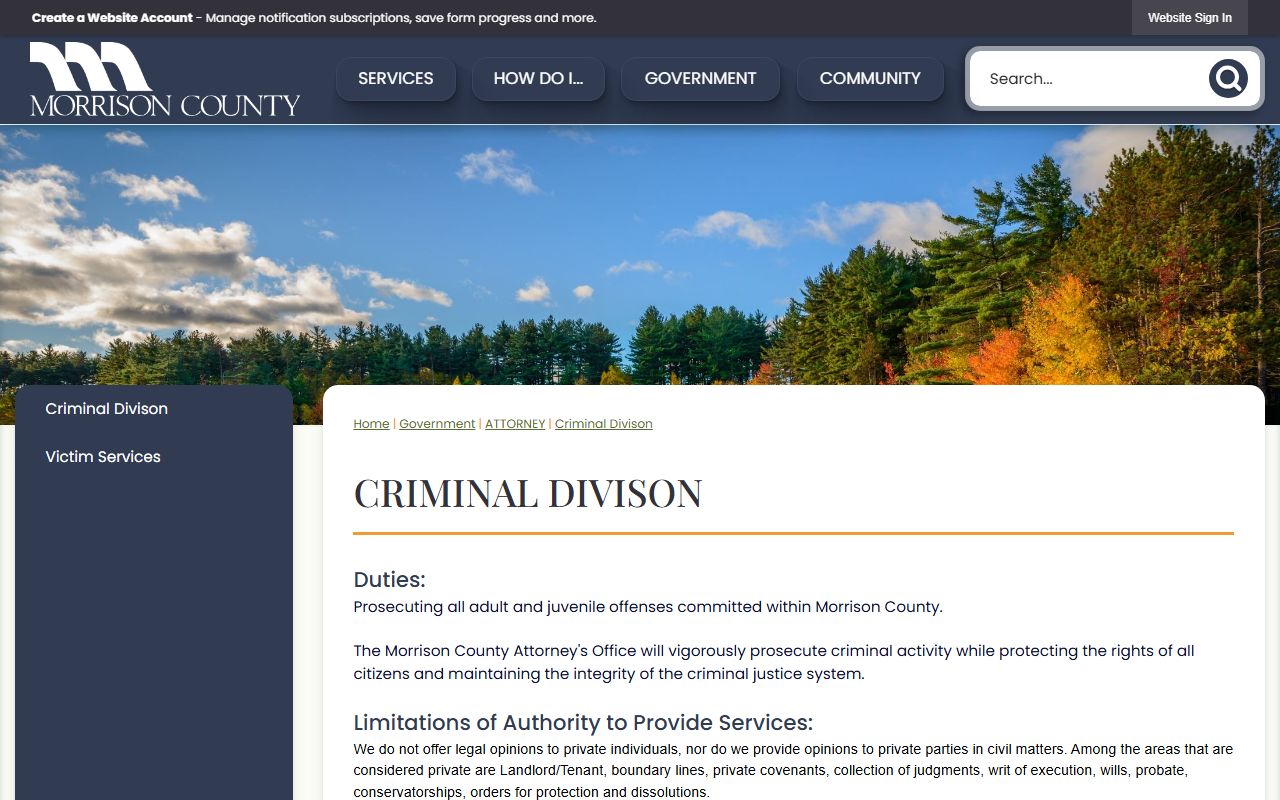
That distinction matters because record questions go to court administration, while legal advice must come from an attorney.
Criminal Record Field Inventory
Morrison County criminal court records use the county number 49 in case numbers, with CR identifying criminal case files. The case number, charge list, hearing history, and Register of Actions should be read together. One case can contain multiple charges, and each charge can have a separate status or final disposition. The court calendar may show hearing type and location before the full case record shows a final outcome.
| Field | What It Shows |
|---|---|
| Case number | The Morrison County court file number, such as a 49-CR format. |
| Defendant | The person charged in the criminal case. |
| Charge text | The offense description and statute cited by the filed charge. |
| Severity | Felony, gross misdemeanor, misdemeanor, petty misdemeanor, or other level where displayed. |
| Hearing entries | Arraignment, omnibus, pre-trial, contested omnibus, probation violation, review, or trial events. |
| Plea | The defendant's formal response to a charge when entered and public. |
| Disposition | The outcome of each charge, including conviction, dismissal, amendment, acquittal, or other result. |
| Sentence | Jail, probation, fines, conditions, treatment, restitution, or other court-ordered consequences. |
| Bond / bail | Release amount, hold status, or conditions where public. |
| Redactions | Protected addresses, comments, sealed items, juvenile limits, and remote-access omissions. |
Charges vs Convictions
A charge is not the same as a conviction. A Morrison County criminal court record can show charges that were filed, amended, reduced, dismissed, or resolved without a conviction. A conviction occurs only after a guilty plea, guilty verdict, or other accepted finding of guilt. Public readers should check the disposition for each charge before drawing conclusions from the charging section alone.
| Point | Charge | Conviction |
|---|---|---|
| Meaning | An accusation filed in court. | A finding or plea of guilt accepted by the court. |
| Where it appears | Complaint, charge list, roster, calendar, and Register of Actions. | Disposition, sentencing order, judgment, or conviction entry. |
| Can change? | Yes. Charges can be amended, reduced, dismissed, or added. | Changes usually require appeal, correction, withdrawal, or later court order. |
| How to read it | Check all counts and current status. | Read sentence, probation, fines, and discharge terms with the disposition. |
Morrison County Criminal Access
Adult criminal court records are often public, but remote access is limited by court rules. The Minnesota Rules of Public Access to Records of the Judicial Branch govern court records, and Rule 8 makes internet access narrower than courthouse access. MCRO may omit public courthouse records, and it may omit pending criminal, traffic, and petty misdemeanor cases from defendant-name search results when there is no conviction. The result is not proof that no case exists.
The Minnesota BCA Public Criminal History Search is the public criminal-history channel named in MCRO terms for background-style searches. It is different from the court case file. A court case file can show filed charges and case events. A criminal history search is built for criminal-history reporting. For sentenced prison-level offenders and fugitives, the Minnesota Department of Corrections offender search is a separate state channel.
The BCA Criminal History System is the proper public criminal-history route when the question is broader than one Morrison County court case.
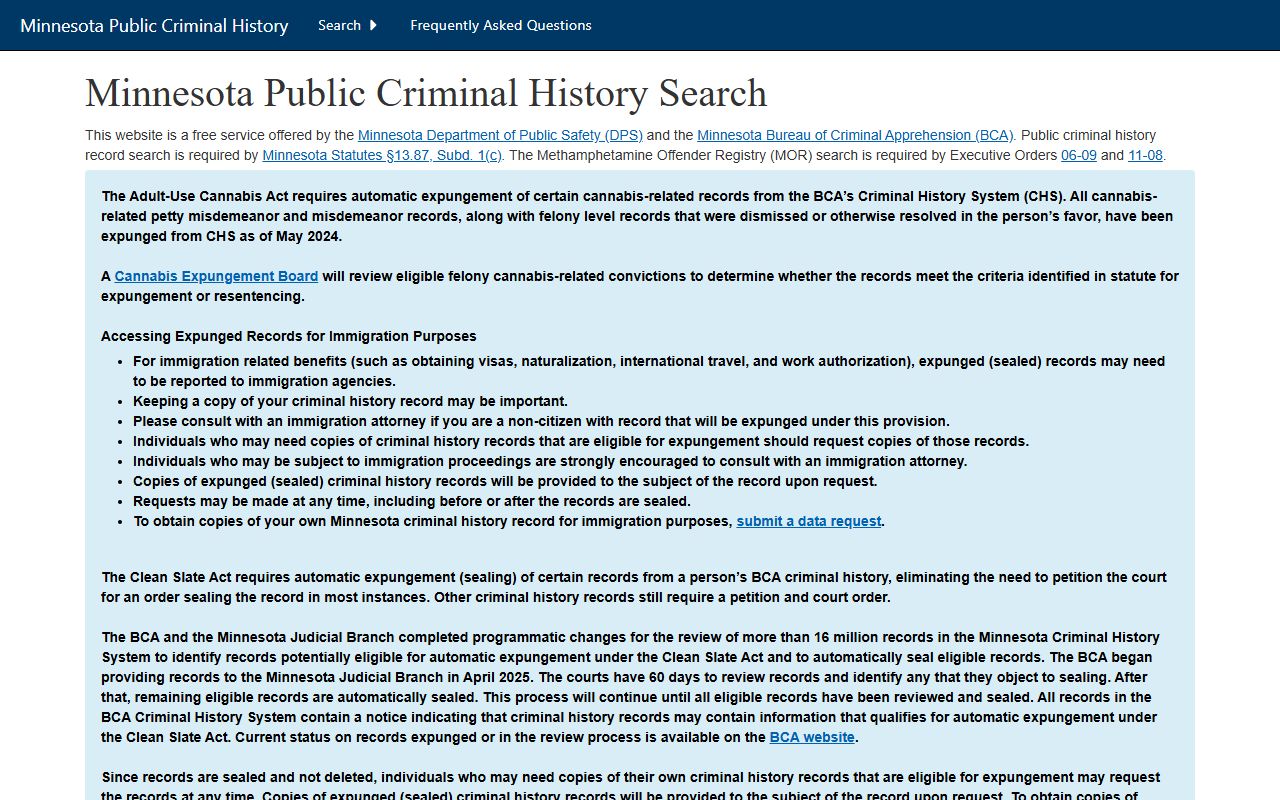
Use BCA for criminal-history lookup and MCRO for District Court case-file lookup.
The Minnesota DOC offender search can help when a Morrison County criminal case resulted in a prison-level sentence.
DOC information does not replace the court file, but it may confirm custody or supervision after sentencing.
Sealed vs Expunged Records
Sealing and expungement are public-access limits. Minnesota expungement under chapter 609A can seal criminal court records from public view when statutory requirements are met. A person seeking expungement generally files a petition under Minn. Stat. section 609A.03 and pays the filing fee unless a fee waiver or no-fee statutory category applies. The process is different from asking MCRO to remove a search result. The District Court decides whether the record should be sealed.
| Point | Sealed Record | Expunged Record |
|---|---|---|
| Public visibility | Not open to ordinary public inspection. | Sealed from public access under the expungement order. |
| How it happens | By rule, statute, or court order. | Usually by petition or qualifying automatic expungement law. |
| Public search effect | May not appear in MCRO or public calendar. | Should not appear through ordinary public search channels. |
| Agency access | Authorized access may remain. | Authorized agencies may retain statutory access in some situations. |
| Local venue | Morrison County District Court if tied to a local case. | Morrison County District Court for a Morrison County case petition. |
The Minnesota expungement petition statute sets the petition framework for many criminal-record sealing requests.
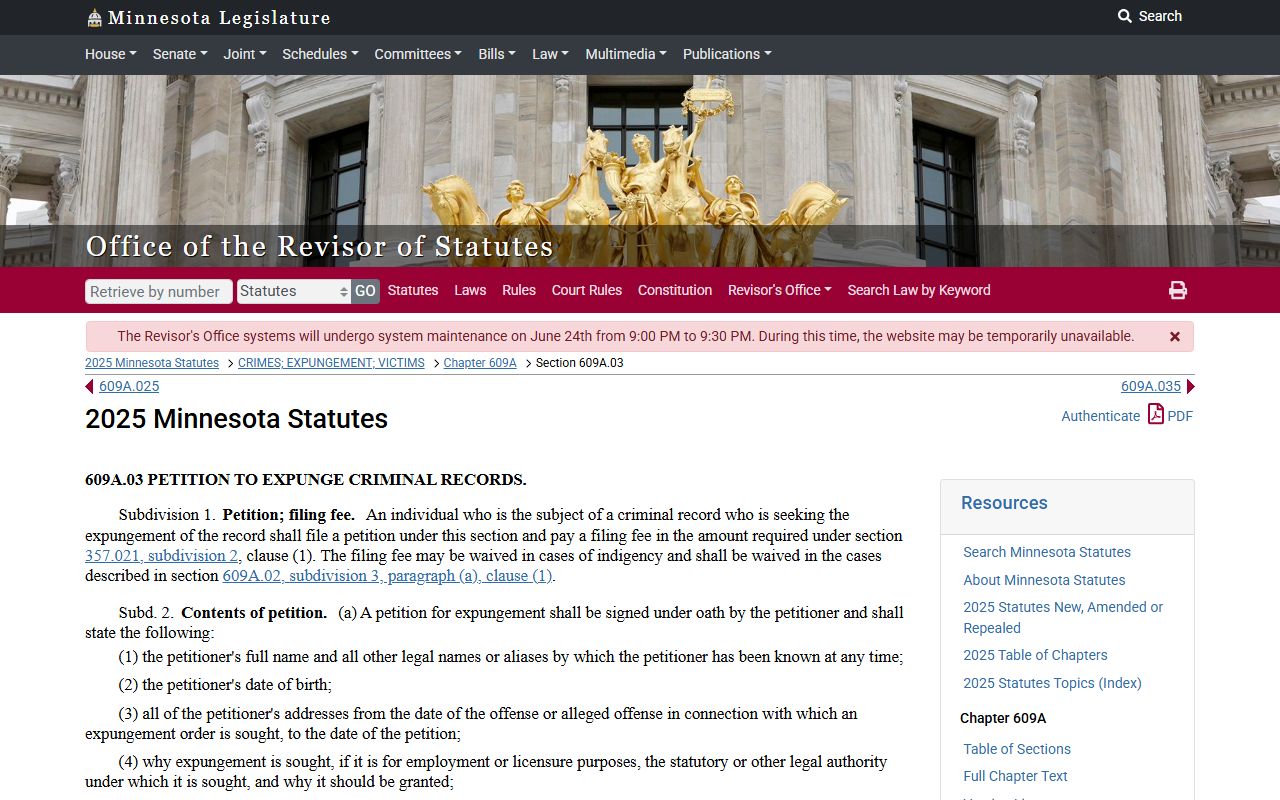
The petition statute is the court route for sealing; it is not an online search correction form.
Victim and Defense Records
Criminal case files can affect victims, defendants, witnesses, and attorneys in different ways. Morrison County Attorney Victim Services provides notice of plea negotiations, changes in court schedules, decisions not to prosecute certain domestic assault or harassment cases, final disposition, and release from prison or institution. Victims may request a speedy trial, object to plea agreements or proposed dispositions, attend sentencing, submit victim impact statements, and seek restitution or financial assistance resources.
People charged with a misdemeanor, gross misdemeanor, or felony with possible jail time may ask the court to appoint a public defender if they cannot afford counsel. The court reviews financial eligibility. The Seventh Judicial District Public Defender, St. Cloud Office, is listed as the local public defender contact in the research materials. Criminal records research should not be treated as legal advice for either side of a case.
The Morrison County Victim Services page lists notice, participation, protection, and financial assistance categories for criminal cases.
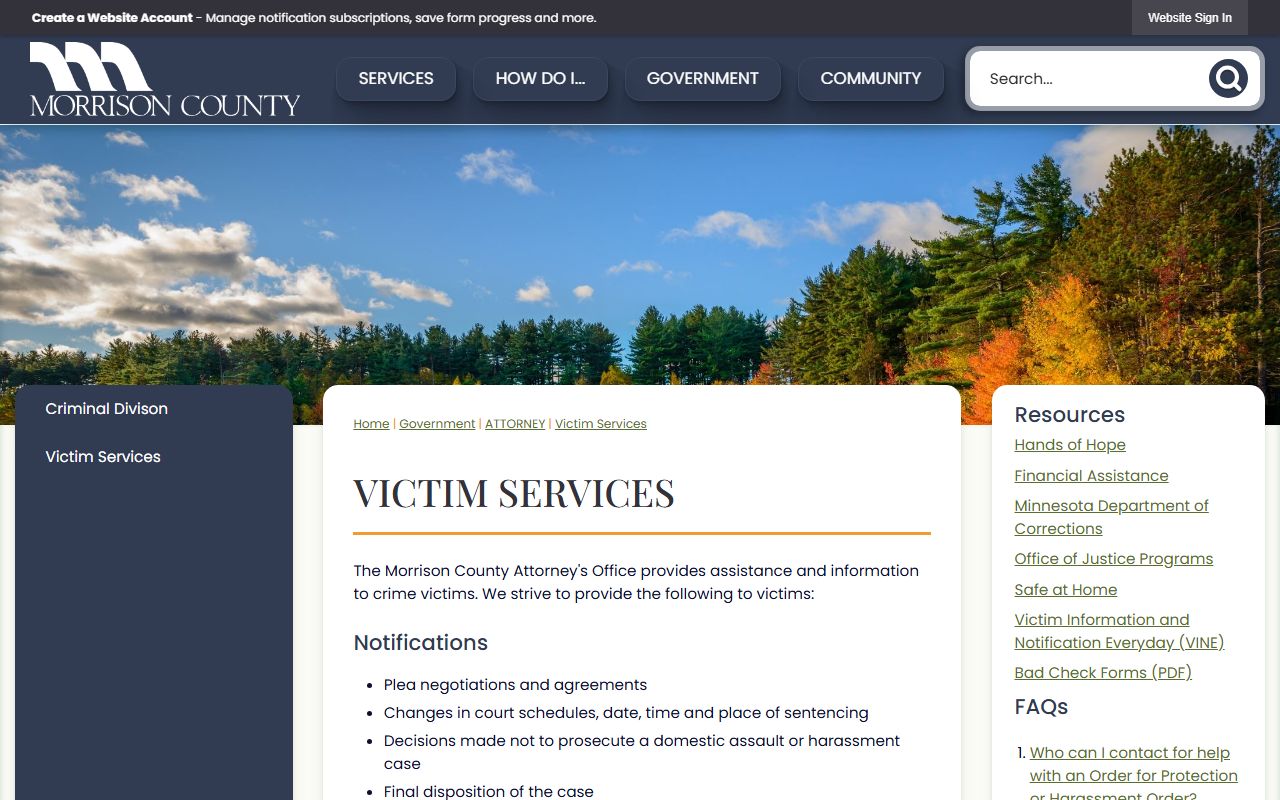
Victim notice can explain why schedule changes and final disposition entries matter beyond a simple docket search.
Restricted Morrison Criminal Records
Restricted criminal court records include sealed or expunged cases, most juvenile delinquency records, and some protected information inside otherwise public files. Minnesota Statutes section 260B.171 and juvenile court rules limit public access to juvenile legal records. MCRO also excludes some remote case categories and omits party street addresses and many comment fields. Domestic abuse no-contact order conditions, sentencing condition comments, and other criminal terms may appear only when court rules allow display.
For official Morrison County criminal court records, contact Morrison County District Court Administration at 213 First Avenue SE, Little Falls, phone (320) 412-7010, during Monday-Friday court office hours. Certified copies, public terminal access, and older files are handled there. For sheriff reports, arrest narratives, or booking records not shown through the court file, use the Sheriff's Records Unit instead of court administration.